

POC Portable Radio
A portable radio is a device that is designed to be easily carried from one location to another and operated using batteries or an AC power source. It typically consists of a tuner that can receive a range of radio frequencies, a speaker, and various controls for adjusting the volume, tuning, and other settings. Portable radios can be used for listening to music, news, weather reports, emergency alerts, and other broadcasts, and are commonly used in outdoor activities, during power outages, and for general entertainment purposes.
1. Professional team: We have a professional team that designs and develops wireless communication technology, with a deep understanding of wireless communication networks, protocols, and related technologies.
2. High quality
Our products are durable and can withstand harsh environments. We use the latest manufacturing technologies and processes to manufacture products that meet or exceed industry standards.
3. Innovation
We have invested heavily in research and development, which has enabled us to stay at the forefront of emerging technologies and trends. This means we can provide innovative products to meet the constantly changing needs of our customers.
4. Reliable service
Our team is committed to providing reliable and consistent service, ensuring that you receive high-quality products and customer support from us every time.


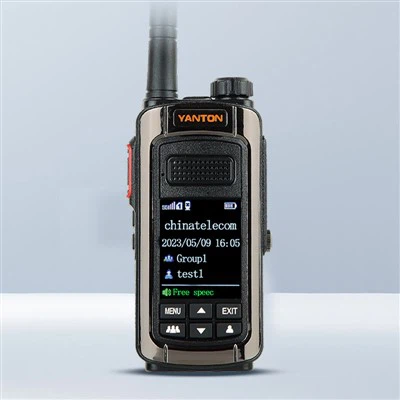


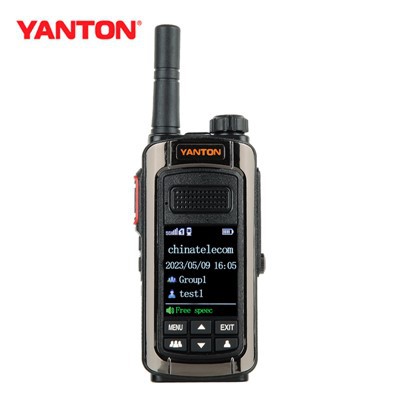


Characteristic of POC Portable Radio
Compact and lightweight: Portable radios are designed to be easy to carry and move around with. They are relatively small in size and light in weight compared to traditional radios.
Battery-powered: Most portable radios are powered by batteries, which makes them more versatile and convenient to use in locations where access to electricity is limited or unavailable.
AM/FM or digital capability: Portable radios come in different types, including AM/FM or digital. This ensures that you can access different kinds of radio stations, including those that transmit in different digital formats.
Sound quality: Portable radios are known for their high-quality sound despite their small size. The speakers are designed to produce clear and rich sound that is loud enough for personal use.
Durability: Portable radios are made with high-quality materials that make them durable and long-lasting. They are designed to withstand rough handling, bumps, and drops.
Simple controls: They are designed with simple controls that are easy to use, even for people who are not tech-savvy. The controls are often user-friendly and intuitive for anyone to operate.
LCD display: Many portable radios have an LCD display that shows information about the station and other features, such as the time, date, and battery level. This feature makes it easy to keep track of the radio's settings and functionality.
Affordable: Portable radios are relatively affordable and cost-effective compared to other entertainment devices. They offer good value for money and are accessible to most people, regardless of their budget.
What Makes a POC Portable Radio Different from Other Portable Radios?
1. POC stands for "Push-to-talk Over Cellular" which means that these radios use cellular networks to function instead of traditional radio frequencies used by other portable radios. This allows POC radios to have wider coverage and better clarity in audio.
2. POC radios usually have larger touch screen displays, advanced GPS tracking, and greater security features for commercial and industrial use.
3. POC radios can work with a wide range of networks, including 3G, 4G, LTE, and Wi-Fi, which enhances their usability for different applications.
4. POC radios come with unique features such as lone worker protection, instant messaging, and other additional functionalities for a diverse set of uses.
Overall, POC radios offer more advanced features and capabilities than traditional portable radios to meet the ever-increasing communication needs of various industries and sectors.
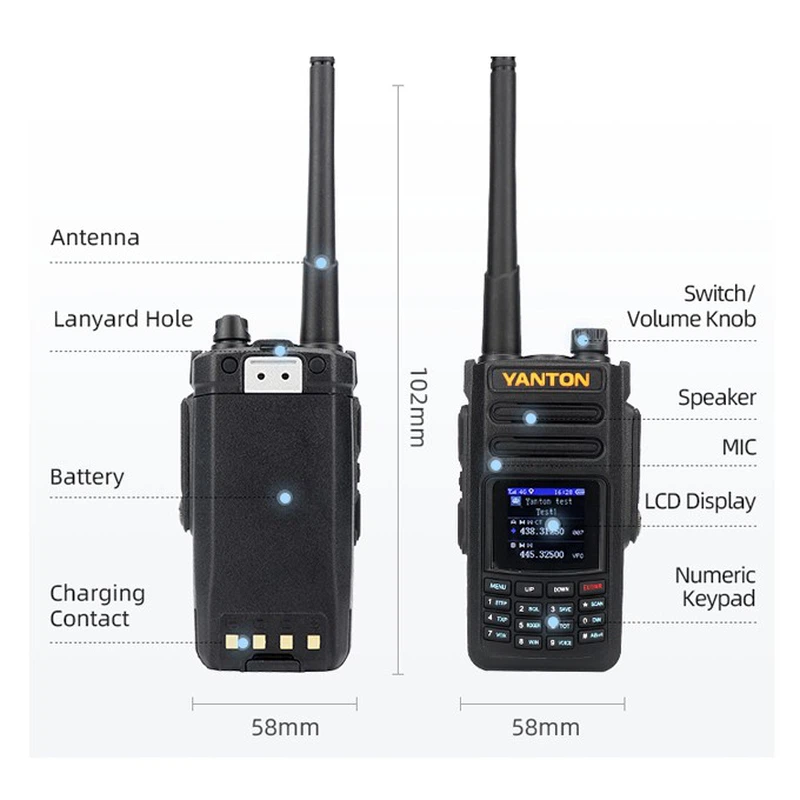
The Benefits of POC Portable Radio
The systems are now becoming increasingly popular in the UK and there is a good reason for this due to the number of benefits you can gain from a system which we illustrate below:
Long distance communications
With conventional radios, communicating over a long distance is very difficult. You tend to need equipment like repeaters to expand your radio coverage/network. However, with POC you can now communicate with your team not just locally, but nationally or even internationally.
Low start-up costs
Unlike traditional radio there are no requirements for infrastructure investment. No need to invest in repeaters, cabling, or radio programming. Once set up as simple as turning on the unit and starting the call by pushing the PTT (push-to-talk) button.
Instant communication
With just a press of a button, push-to-talk over cellular (POC) allows you to communicate with individuals within your team or groups over distances instantly. With the radio system, this is over a private closed network using a high level of encryption on a cloud server securing your private data and communications.
Great sound quality
You will be able to experience superior sound quality even in the harshest environments. Thanks to the excellent noise-cancelling features on the ip501h/ip503h handset, you will never need to worry about getting your voice heard.
Range of features
Good POC radio systems should have a variety of useful features like an emergency button, man down and lone worker function. These features are ideal for environments where employees are working independently and need to be in contact constantly by voice or in the case of an emergency.
Easy to administer
Radio systems like the radio system can be administered/programmed over the air without the radio needing to be returned to the dealer.

How Does POC Portable Radio Works?
POC is also referred to as radio over IP (roip). Similar to voice over IP (voip), roip devices are handheld two-way radios that access cloud based POC services via the internet for voice and video calling.
POC radios are also known as internet of things (IOT) devices that access the internet for data communications and can also access the internet via Wi-Fi networks like any other mobile device.
This alphabet soup of terminology gets confusing, but simply put, POC devices access the internet through 4G/LTE cellular networks and Wi-Fi networks for wide-area radio communications. The result is access to existing and reliable networks that require no maintenance or operational expenses. An app on the POC device (typically an android operating system) provides simple and convenient access to POC services.
POC network services are typically hosted on the cloud using POC controllers (network appliances) that are operated by a POC platform service provider. POC controllers can also be privately owned and operated by the customer. Gateway routers provide connectivity between the 4G/LTE network and the cloud hosted POC controller. Dispatch applications and the management application (used to configure customer accounts) are connected to the POC cloud server through the internet.
History: POC Portable Radio
An air traffic controller usually supervises several aircraft and talks on one radio frequency to all of them. Those under the same frequency can hear others' transmissions while using procedure words such as "break", "break break" to separate order during the conversation (ICAO doc 9432). In doing so, they are aware of each other's actions and intentions. Unlike in a conference call, they do not hear background noise from the ones who are not speaking. Similar considerations apply to police radio, the use of business band radios on construction sites, and other scenarios requiring coordination of several parties.
The PTT switch is most commonly located on the radio's handheld microphone, or for small hand-held radios, directly on the radio. For heavy radio users, a PTT foot switch may be used, and also can be combined with either a boom-mounted microphone or a headset with integrated microphone.
Less commonly, a separate hand-held PTT switch may be used. In situations where a user may be too busy to handle a talk switch, voice operated switches are sometimes employed. Some systems use PTT id to identify the speaker.
5 Advantages of POC Portable Radio You Should Know
POC (push-to-talk over cellular) radio is a type of communication system that allows instant voice communication over cellular networks. It works similarly to a traditional two-way radio/walkie-talkie, but instead of using radio frequencies, it utilizes cellular networks to transmit voice data.
POC radio systems combine the convenience and flexibility of smartphones with the reliability and security of traditional two-way radios. Its advantages include:
1. Wide coverage area
POC portable radio can achieve long-distance communications by utilizing 2g/3g/4g cellular networks, which have broader coverage compared to traditional radio systems.
2. Instant PTT communication
Similar to traditional two-way radios, POC radios enable instant, push-to-talk communication. Users can communicate with individuals or groups instantly and efficiently without dialing or waiting for phone calls.
3. Enhanced communication experience
POC radios provide clear voice communication, even in harsh environments with noise or interference. Communication quality can be improved even further with AI noise reduction.
4. Versatility and scalability
POC radios often provide additional features like GPS tracking, SOS NFC, bluetooth, dispatch systems, device cloud service platform, and so on. Additionally, POC radios support various accessories to meet different needs.
5. Cost-effective solution
POC radios leverage existing cellular networks, eliminating the need for building and maintaining separate radio network infrastructure. This offers considerable cost savings compared to traditional radio systems.
The advantages described above make POC radios an attractive option for industries that need a reliable and efficient communications solution. However, it also has some disadvantages, such as dependence on cellular networks, data usage, battery life, and complexity. Users should carefully weigh the advantages and disadvantages to determine if POC radios is appropriate for their specific communication needs.
POC portable radio leverages existing cellular and WLAN networks, which means POC is particularly useful for organizations and businesses that rely on communication across widely dispersed areas or with mobile workforces but don't want to invest in the infrastructure required.

Custom Notebook Solutions

Moreover, the POC portable radio solution can provide you with voice and videos calls, multimedia messages, video dispatch, etc. It also enables users to make individual calls or group calls with only one press of a button over the global cellular network. The integrated GPS for location tracking aids in managing, scheduling, and monitoring fleets or on-field workers. POC portable radio solutions are suitable for public safety, transportation, construction, energy & utility, warehouse and supply chain sectors, and many more.
How to Use a POC Portable Radio?
POC portable radio communication systems provide a reliable framework for business and organisations to stay in touch. Two way radio offers a vast range of benefits above and beyond the essential communication that they offer including improving decision making, teamwork and providing essential health and safety. Sometimes even the most effective radio system can be let down if the right procedures and training aren't in place and the user is not able to handle a radio confidently.
Make sure that your battery is charged.You won't get very far if this does not happen. Then switch on the radio this is often done with the volume control. Check to see that the radio is on the correct channel otherwise no one will hear you and vice versa. Then listen for transmission and adjust the volume to a comfortable audible level.
If you want to make a call, wait for the channel to become clear to avoid interference. Push and hold the PTT button. Speak into the microphone (10 to 15 centimetres from your mouth) clearly and at a normal voice level. Then release the PTT to return to receive.
As two-way radios only allow one person to speak at a time, it's best to keep your transmissions short and to the point. This enables other users to have the opportunity to acknowledge your message or request further clarification before you carry on to your next point. Be patient and give the other person some time to think before they reply.
When you first press the push to talk (PTT) button there can be a short delay before your radio transmits. This could result in the start of your sentence being cut off so wait for a second or two before speaking to be sure your listeners receive your whole message.
It helps two-way radio communications when everyone understands and uses similar language and etiquette especially when there are more than two people using the channel. You will notice that some of your colleagues may say 'over' when they have finished speaking or 'out' when the conversation is finished and the channel is clear for other users. It is useful to pick up on these phrases as they will improve not only your confidence but the efficiency of the radio scheme.
Our Factory
Quanzhou YANTON Electronics Co., Ltd. is founded in the year of 2009, which is a professional wireless communication equipment manufacturer integrates with R&D, production, sales, service and technological innovation strength. Our products cover POC radio, DMR radio, analog radio and so on.
With more than 7,000 square meters, YANTON has brought in advanced production equipment, testing instruments, standardized production workshops, well-equipped product laboratories and R&D offices. Our company has introduced the ERP management system and passed the ISO9001:2015 Quality Management System Certification. Also we use the components from TOSHIBA, ST, NEC etc. to guarantee the quality of the products. Our products have been passed the model approval by Ministry of Information Industry,also European CE RoHS and USA FCC. At present, our products have been sold to more than 58 countries such as Europe, the United States, Canada, Russia etc., and appraised highly by the customers.



FAQ
Q: What is the difference between a mobile radio and a portable radio?
Q: How does a POC radio work?
Q: What is push to talk over cellular technology?
Q: What is push-to-talk radio?
Q: What are examples of POC?
Q: How long does it take to charge a radio battery?
Q: How long do batteries last in a portable radio?
Q: Can POC portable radios be submerged in water?
Q: Are POC portable radios legal to use?
Q: Who uses POC portable radios?
Q: What are the advantages of using a POC portable radio?
Q: How does a POC portable radio work?
Q: What is the basic radio maintenance of a handheld radio?
Q: How do you maintain a radio?
Q: Why does my portable radio have static?
Q: How do you clean a radio?
Q: How can I boost my radio signal?
Q: Why does my radio get better reception when I touch it?
Q: Is there a limit to the number of POC portable radios that can be used in a group?
Q: Why is my radio signal weak?
We're professional poc radio manufacturers and suppliers in China, specialized in providing high quality customized products. We warmly welcome you to buy or wholesale high-grade poc radio for sale here from our factory.
4G POC Walkie Talkie, 4g Dual Mode Mobile Radio, Free Platform 4g Network Radio