

License Two Way Radio
A license two way radio refers to a type of radio communication system that requires a license from the Federal Communications Commission (FCC) to operate. These radios are commonly used by businesses and organizations that require efficient and secure communication between groups of people. They can also be used by individuals with a specific need for radio communication, such as amateur radio operators or hunters. The FCC issues licenses to ensure that the radio systems operate within specific frequencies and power limits, reducing the risk of interference and ensuring effective communication.
1. Professional team: We have a professional team that designs and develops wireless communication technology, with a deep understanding of wireless communication networks, protocols, and related technologies.
2. High quality
Our products are durable and can withstand harsh environments. We use the latest manufacturing technologies and processes to manufacture products that meet or exceed industry standards.
3. Innovation
We have invested heavily in research and development, which has enabled us to stay at the forefront of emerging technologies and trends. This means we can provide innovative products to meet the constantly changing needs of our customers.
4. Reliable service
Our team is committed to providing reliable and consistent service, ensuring that you receive high-quality products and customer support from us every time.




Advantages of License Two Way Radio
Legal compliance: A licensed two way radio ensures that your communication is legal and operates within the FCC guidelines. It will also help you avoid penalties and legal consequences associated with unlicensed radio communication.
Better coverage: Licensed two way radios have a better range and coverage compared to unlicensed radios. This is because they use more powerful frequencies and are not subject to interference from other unregulated devices.
Improved audio quality: Licensed two way radios are more reliable and have a higher quality audio than unlicensed radios. The signal quality is also more stable, resulting in clearer communication.
Priority access: In case of emergency or disaster, licensed two way radio users get priority access to communication channels, ensuring that critical messages are not lost or delayed.
Warranty and support: Licensed two way radios typically come with a manufacturer's warranty and additional technical support, making it easier to maintain and repair them.
Improved security: Licensed two way radios can offer encryption features, which protect the communication channels from unauthorized access or interception. This ensures the privacy and confidentiality of your communication.
Suggestions for maintaining License Two Way Radio
So you have made a purchase of a fleet of two way radios and want to ensure that you and your team look after them. We have put together a list of simple things that you can do to take care of your important investment.
1. Advice for storing two way radios
Radios should be stored in a clean, dry, cool place with limited exposure to the weather elements. When you store your radio, you should remove the battery as most modern radios have a soft on/off switch which will continually drain the battery.
2. Advice for charging two way radios
For day to day battery charging, make sure all the battery contacts are clean, both on the charger and the rear terminals of the battery. If the contacts are dirty then the battery may not be detected by the radio charger and will not charge the battery correctly. Make sure that you charge your radio batteries in a compatible charger otherwise you could potentially damage your battery and radio.

3. Advice for day to day use
Advice for looking after your fleet of two-way radios
Our radios meet the highest standards of mil-spec, waterproofing and dust proofing. However radios can be damaged due to repetitive mistreatment such as being dropped, chewed aerials (yes this really does happen) and swinging the radio by the antenna etc. Protecting the exterior of your radio will help protect the components, minimizing repairs and cost of replacing the equipment.
4. Advice for cleaning two way radios
Although we have two way radios that are highly dust/waterproof, there may be a time when you need to clean them. Firstly ensure that the radios are turned off. Avoid any industrial cleaners that have not been approved to clean your radios as they could potentially damage them. Use a damp microfiber cloth to remove any excess dirt.
5 Reasons License Two Way Radios Are Still a Big Deal
This isn't your grandpa's radio
A lot has changed in the past 100 years - including two-way radio technology and its capabilities. Since walkie-talkies were invented, they have fully evolved into a faithful piece of communication equipment for businesses everywhere around the world. Radios today have better sound quality and range. They are also oftentimes a lot more than just a radio being loaded with bonus features to help teams be more efficient. Don't forget radios have updated programming abilities and much more sleek designs too.
Health & safety
License Two Way Radios are an exceptionally reliable communication tool. They are more likely to keep your team safe and connected in an emergency than your typical mobile phones because they don't need a cellular signal or Wi-Fi connection to be operational. Due to the programmable nature of walkie-talkies, they are optimal for emergencies and trusted by first responders such as firefighters and paramedics. On top of the communication features that can help keep your team safe, newer two-way radios often have added safety features.
Keep it simple
Most of us have used a two-way radio at least once in our life. Even if you haven't, they are incredibly easy to use. Most two-way radios operate on a single channel at a time and require the user to simply push a button and talk. Through additional programming, radios can become more complex to meet your team's communication needs. However, at a basic level, two-way radios are extremely user-friendly.
Top-notch communication tool
License Two Way Radios provide top-notch sound quality and range. They also trim the downtime that is sometimes experienced with cell phones due to their reliance on cell towers. This is especially a benefit for remote areas that are lacking a reliable cellular signal. With two-way radios, your team will not have to deal with poor reception or dropped calls. Two-way radios are also known for having noise cancellation properties to increase sound quality and provide crispy clear communication.
Connect your team
License Two Way Radios are unique from other communication tools because their programmable nature can allow you to customize channels that perfectly fit your team's needs. Use your walkie-talkies for one-to-one or one-to-all communication, along with every combination in between. They are also known for being a secure means of communication because they run on closed networks, unlike cell phones.
How to Use a License Two Way Radio?
License Two Way Radio communication systems provide a reliable framework for business and organisations to stay in touch. Two way radio offers a vast range of benefits above and beyond the essential communication that they offer including improving decision making, teamwork and providing essential health and safety. Sometimes even the most effective radio system can be let down if the right procedures and training aren't in place and the user is not able to handle a radio confidently.
Getting started
Make sure that your battery is charged.You won't get very far if this does not happen. Then switch on the radio this is often done with the volume control. Check to see that the radio is on the correct channel otherwise no one will hear you and vice versa. Then listen for transmission and adjust the volume to a comfortable audible level.
01
Being heard
If you want to make a call, wait for the channel to become clear to avoid interference. Push and hold the PTT button. Speak into the microphone (10 to 15 centimetres from your mouth) clearly and at a normal voice level. Then release the PTT to return to receive.
02
Be clear
As two-way radios only allow one person to speak at a time, it's best to keep your transmissions short and to the point. This enables other users to have the opportunity to acknowledge your message or request further clarification before you carry on to your next point. Be patient and give the other person some time to think before they reply.
03
Pause before speaking
When you first press the push to talk (PTT) button there can be a short delay before your radio transmits. This could result in the start of your sentence being cut off so wait for a second or two before speaking to be sure your listeners receive your whole message.
04
Learn the lingo
It helps two-way radio communications when everyone understands and uses similar language and etiquette especially when there are more than two people using the channel. You will notice that some of your colleagues may say 'over' when they have finished speaking or 'out' when the conversation is finished and the channel is clear for other users. It is useful to pick up on these phrases as they will improve not only your confidence but the efficiency of the radio scheme.
05
License Two Way Radio Buyers Guide
License two way radios are available in four types: Handheld, vehicle-mounted mobile, desktop base station and repeater base station.
● Handheld two way radios are the walkie talkie type of radios you see people carrying around.
● Vehicle-mounted mobile two way radios mount in a car or truck, using the vehicle's battery for power. They will achieve better range by using an externally mounted antenna on the vehicle.
● Desktop base station radios use mains power and can be connected to a cable that leads to an externally mounted antenna. The higher the antenna is mounted, the better the range. The vehicle-mounted mobile radio is often used as a base station by adding an ac to dc power converter.
● Two way radio repeaters are essentially radios that increase the operational range of your PMR radio system. Repeaters can be used to cover areas in your business where a two way radio will not transmit or receive. A repeater receives the transmission of a two way radio and rebroadcasts it further.
What Features Do I Need on a License Two Way Radio?
License two way radios can be purchased with a variety of functions and features.Here are just a few that you may want to consider.
Many features can be installed or programmed into a two way radio. The 'emergency call' of 'man down' feature enables the radio user to notify all other radios on the same channel immediately. For example, suppose the radio users should become injured, trapped or in danger. In that case, a simple push of a button will call everyone, and the microphone on the radio is automatically activated for a brief period so the users can call out a message.
Good quality radio units allow you to switch between high and low power modes. Low power reduces the range of your two way radio, but it extends the life of the battery and vice versa. Some radios also let you program the power mode on individual channels so some channels can use low power , while other use high power.
Headsets, spare batteries, cases, belt clips and speaker microphones are often necessary. Check out our range of two way radio accessories to find the accessories you are looking for.
A warranty is mandatory, but it is also a guarantee of peace of mind when purchasing a radio that the dealer and manufacturer can back up what they are saying regarding product quality and build.
What Are the Benefits of License Two Way Radios?

License two way radios come with many benefits. For instance, these radios do not require any system installation or set up; they are open the box and ready to use. Because of the simplicity of license two way radios, it is a common misconception that the radios are not as reliable in technology and design.
License two way radios are just as powerful and up to date in technology as licensed radios; they just have distinctive features. Another excellent feature and benefit for license two way radios is they all work on the same channels. This benefit makes these radios beginner friendly. Lastly, because the radios are license free, owners and users do not have to worry about annual license renewals.
Overall, license two way radios come with a multitude of benefits related to ease of access and use without sacrificing quality.
Our Factory
Quanzhou YANTON Electronics Co., Ltd. is founded in the year of 2009, which is a professional wireless communication equipment manufacturer integrates with R&D, production, sales, service and technological innovation strength. Our products cover POC radio, DMR radio, analog radio and so on.
With more than 7,000 square meters, YANTON has brought in advanced production equipment, testing instruments, standardized production workshops, well-equipped product laboratories and R&D offices. Our company has introduced the ERP management system and passed the ISO9001:2015 Quality Management System Certification. Also we use the components from TOSHIBA, ST, NEC etc. to guarantee the quality of the products. Our products have been passed the model approval by Ministry of Information Industry,also European CE RoHS and USA FCC. At present, our products have been sold to more than 58 countries such as Europe, the United States, Canada, Russia etc., and appraised highly by the customers.



FAQ
Q: Why do some radios require a license?
Q: Why do some walkie talkies need a license?
Q: Are 2 way radios still used?
Q: Is a two-way radio wired or wireless?
Q: Can other people hear you on a two-way radio?
Q: Is a two-way radio wired or wireless?
Q: Are two-way radios analog or digital?
Q: Why is it called a two-way radio?
Q: Can two-way radios be tracked?
Q: Do 2 way radios use cell towers?
Q: What is a two-way radio license?
Q: Who needs a two-way radio license?
Q: What information is required on a two-way radio license application?
Q: Who governs the use of two-way radios?
Q: Why is it called a two-way radio?
Q: Do two-way radios need a tower?
Q: How can I boost my 2 way radio signal?
Q: What are license-free radios?
Q: What are the benefits of license two way radios?
Q: What is the difference between analog and digital two-way radios?
We're professional two way radio antenna manufacturers and suppliers in China, specialized in providing high quality customized products. We warmly welcome you to buy or wholesale high-grade two way radio antenna for sale here from our factory.
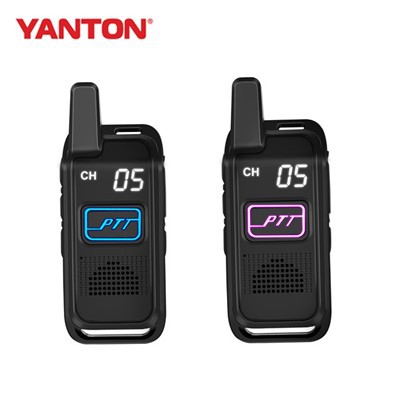
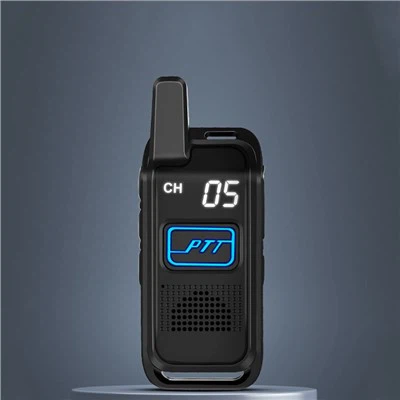
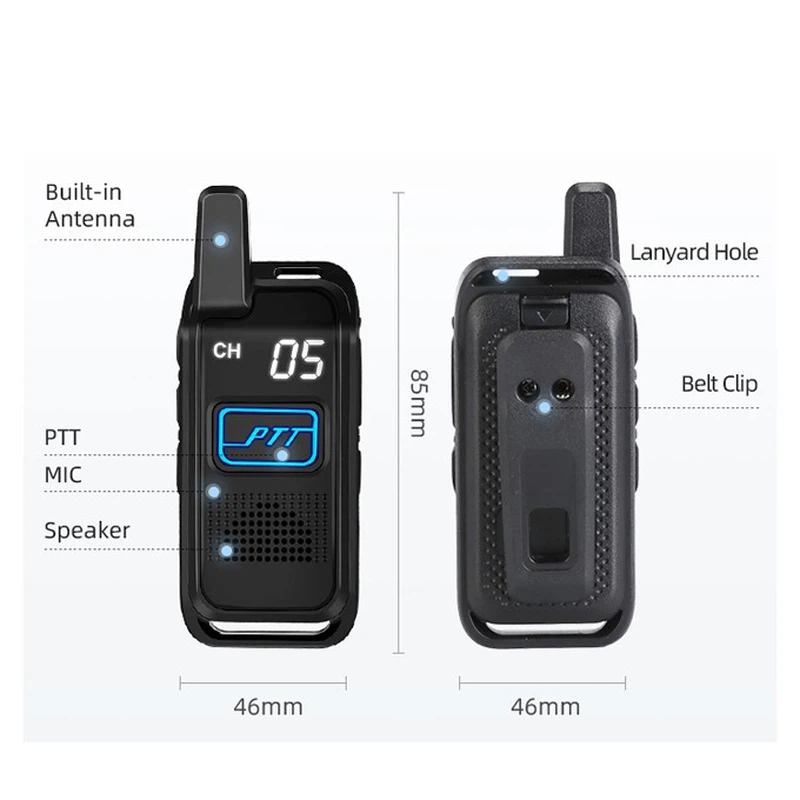
Small Pocket Radio With Hidden Display, Pmr 2w Two Way Radio License Free, Pocket Mini Walkie Talkie