

DMR Two Way Radio
DMR (Digital Mobile Radio) Two Way Radio is a type of radio communication system that uses digital technology to transmit and receive voice and data signals over the airwaves. It is commonly used by businesses, public safety organizations, and government agencies as it provides high-quality, secure, and reliable communication. DMR radios use Time Division Multiple Access (TDMA) technology, which divides the frequencies into time slots, allowing multiple conversations to occur on the same frequency at the same time. They also offer features such as text messaging, GPS tracking, and encryption for enhanced security.
1. Professional team: We have a professional team that designs and develops wireless communication technology, with a deep understanding of wireless communication networks, protocols, and related technologies.
2. High quality
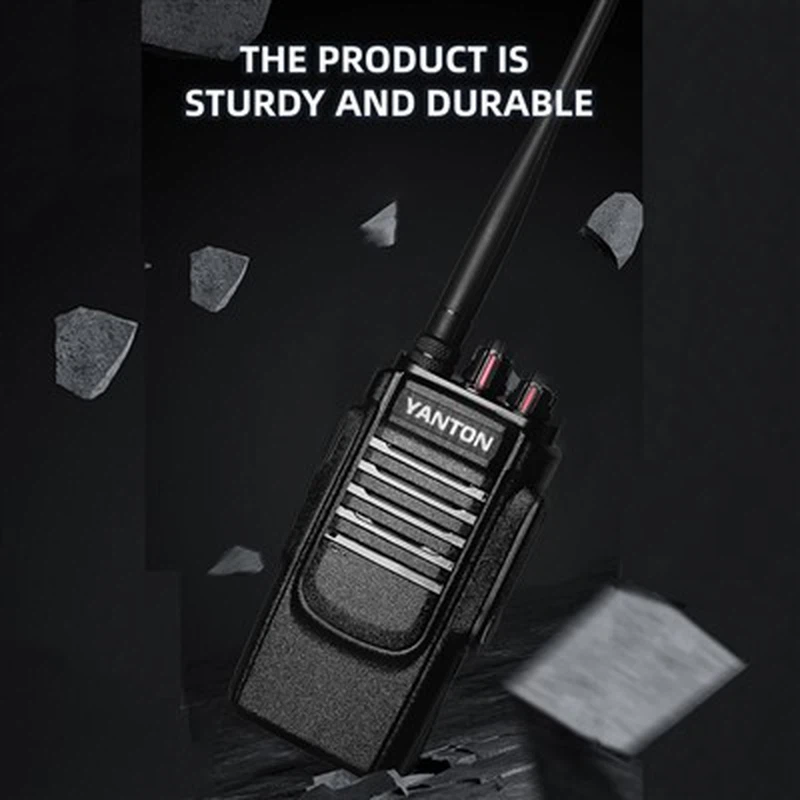
Our products are durable and can withstand harsh environments. We use the latest manufacturing technologies and processes to manufacture products that meet or exceed industry standards.
3. Innovation
We have invested heavily in research and development, which has enabled us to stay at the forefront of emerging technologies and trends. This means we can provide innovative products to meet the constantly changing needs of our customers.
4. Reliable service
Our team is committed to providing reliable and consistent service, ensuring that you receive high-quality products and customer support from us every time.




Advantages of DMR Two Way Radio
Improved audio quality: DMR enables better communication quality over long distances and in challenging environments. The audio quality is crystal clear without any interference.
Longer battery life: With DMR technology, two-way radios can operate for extended periods of time as it uses less battery power compared to traditional analogue radios.
Better coverage: DMR radios have an excellent range, and they are designed to work in all types of environments. They can penetrate through thick walls, concrete, and steel structures, providing better coverage and uninterrupted communication.
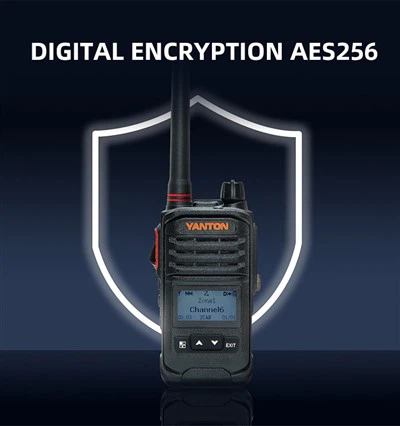
Improved security: Digital radios equipped with DMR technology add an extra layer of security as it encrypts transmissions, making it impossible for outsiders to listen to confidential communications.
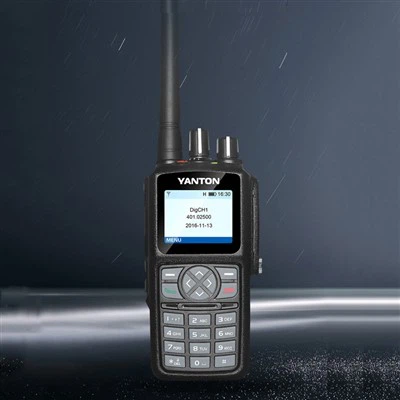
Multi-functional: Two-way DMR radios come with enhanced features that make it versatile to cater to different needs. It's possible to configure the radio to function as a repeater, data transmitter, and GPS locator among others.
Improved scalability: Unlike analogue radios that require physical configuration of new frequencies, DMR technology allows for easy scaling and expansion without changing hardware.
Wide variety of devices: DMR radios come in different shapes and sizes to suit different applications such as hand-held, mobile, or base stations. This makes it easier to choose the right radio for the job.
How to Use a DMR Two Way Radio?
DMR two way Radio communication systems provide a reliable framework for business and organisations to stay in touch. Two way radio offers a vast range of benefits above and beyond the essential communication that they offer including improving decision making, teamwork and providing essential health and safety. Sometimes even the most effective radio system can be let down if the right procedures and training aren't in place and the user is not able to handle a radio confidently.
1. Getting started
Make sure that your battery is charged.You won't get very far if this does not happen. Then switch on the radio this is often done with the volume control. Check to see that the radio is on the correct channel otherwise no one will hear you and vice versa. Then listen for transmission and adjust the volume to a comfortable audible level.
2. Being heard
If you want to make a call, wait for the channel to become clear to avoid interference. Push and hold the PTT button. Speak into the microphone (10 to 15 centimetres from your mouth) clearly and at a normal voice level. Then release the PTT to return to receive.

3. Be clear
As two-way radios only allow one person to speak at a time, it's best to keep your transmissions short and to the point. This enables other users to have the opportunity to acknowledge your message or request further clarification before you carry on to your next point. Be patient and give the other person some time to think before they reply.
4. Pause before speaking
When you first press the push to talk (PTT) button there can be a short delay before your radio transmits. This could result in the start of your sentence being cut off so wait for a second or two before speaking to be sure your listeners receive your whole message.
5. Learn the lingo
It helps two-way radio communications when everyone understands and uses similar language and etiquette especially when there are more than two people using the channel. You will notice that some of your colleagues may say 'over' when they have finished speaking or 'out' when the conversation is finished and the channel is clear for other users. It is useful to pick up on these phrases as they will improve not only your confidence but the efficiency of the radio scheme.
Suggestions for Maintaining DMR Two Way Radio
So you have made a purchase of a fleet of two way radios and want to ensure that you and your team look after them. We have put together a list of simple things that you can do to take care of your important investment.
1. Advice for storing two way radios
Radios should be stored in a clean, dry, cool place with limited exposure to the weather elements. When you store your radio, you should remove the battery as most modern radios have a soft on/off switch which will continually drain the battery.
2. Advice for charging two way radios
For day to day battery charging, make sure all the battery contacts are clean, both on the charger and the rear terminals of the battery. If the contacts are dirty then the battery may not be detected by the radio charger and will not charge the battery correctly. Make sure that you charge your radio batteries in a compatible charger otherwise you could potentially damage your battery and radio.
3. Advice for day to day use
Advice for looking after your fleet of two-way radios
Our radios meet the highest standards of mil-spec, waterproofing and dust proofing. However radios can be damaged due to repetitive mistreatment such as being dropped, chewed aerials (yes this really does happen) and swinging the radio by the antenna etc. Protecting the exterior of your radio will help protect the components, minimizing repairs and cost of replacing the equipment.
4. Advice for cleaning two way radios
Although we have two way radios that are highly dust/waterproof, there may be a time when you need to clean them. Firstly ensure that the radios are turned off. Avoid any industrial cleaners that have not been approved to clean your radios as they could potentially damage them. Use a damp microfiber cloth to remove any excess dirt.
The Dos and Don'ts of DMR Two Way Radio
When using DMR two way radio, remember these best practices to go by and which radio faux-pas to avoid!
1.Do: Think ahead
Always know what you're going to say before you transmit, as no one else can use their radio while you're holding down the talk button. While you're UM-ING and ah-ing someone else might be trying to transmit an emergency message, so be ready and know what you're going to say before you speak.
2. Don't: Transmit confidential information
Unless you have the necessary security in place, don't relay any sensitive information over your radio. Remember that frequencies are shared, and you do not have exclusive use of the frequency.
3. Do: Be clear and brief
Speak clearly, at a regular volume, and a little slower than you normally would. Keep your message concise and only include necessary information.
4. Don't: Interrupt
If other people are having a conversation, wait until they've finished before transmitting your message – unless it's an emergency.
5. Do: Know what to do in an emergency
If other people are having a conversation and you have an emergency message, wait until you hear “over” then press push to talk. Say “break, break, break, [your name/call sign], I have an emergency message for [recipient's name/call sign], do you copy, over.”
6. Don't: Get impatient
The other person may not be able to reply immediately. Give them time to respond before trying again.
7. Do: Identify yourself and who your message is intended for
Before starting your message, identify yourself and get the attention of the person you need to communicate with. For example, [recipient's name/call sign], this is [your name/call sign], over. you can transmit the rest of your message once they have responded and you know they're listening to avoid repeating yourself.
8. Don't: Start talking straight away
There can be a short delay before your radio transmits, so wait a second or two before speaking to make sure the beginning of your message doesn't get cut off.
9.Do: Know the lingo
Here are some key phrases to remember:
● Over – I've finished speaking
● Say again – please repeat your last message
● Stand by – I acknowledge the transmission but can't respond right now
● Go ahead – I can respond, go ahead with your message
● Roger – message received and understood
● Affirmative/negative – yes/no
● Out – conversation finished, channel clear for other users
5 Reasons DMR Two Way Radios Are Still a Big Deal
A lot has changed in the past 100 years - including two-way radio technology and its capabilities. Since walkie-talkies were invented, they have fully evolved into a faithful piece of communication equipment for businesses everywhere around the world. Radios today have better sound quality and range. They are also oftentimes a lot more than just a radio being loaded with bonus features to help teams be more efficient. Don't forget radios have updated programming abilities and much more sleek designs too.
DMR two way radios are an exceptionally reliable communication tool. They are more likely to keep your team safe and connected in an emergency than your typical mobile phones because they don't need a cellular signal or Wi-Fi connection to be operational. Due to the programmable nature of walkie-talkies, they are optimal for emergencies and trusted by first responders such as firefighters and paramedics. On top of the communication features that can help keep your team safe, newer two-way radios often have added safety features.
Most of us have used a two-way radio at least once in our life. Even if you haven't, they are incredibly easy to use. Most two-way radios operate on a single channel at a time and require the user to simply push a button and talk. Through additional programming, radios can become more complex to meet your team's communication needs. However, at a basic level, two-way radios are extremely user-friendly.
DMR two way radios provide top-notch sound quality and range. They also trim the downtime that is sometimes experienced with cell phones due to their reliance on cell towers. This is especially a benefit for remote areas that are lacking a reliable cellular signal. With two-way radios, your team will not have to deal with poor reception or dropped calls. Two-way radios are also known for having noise cancellation properties to increase sound quality and provide crispy clear communication.
DMR two way radios are unique from other communication tools because their programmable nature can allow you to customize channels that perfectly fit your team's needs. Use your walkie-talkies for one-to-one or one-to-all communication, along with every combination in between. They are also known for being a secure means of communication because they run on closed networks, unlike cell phones.
What Distance Do Analog Portable Two Way Radio Work Over?

The answer to this question depends on the equipment you are using and the infrastructure you have installed around it. As an example, the international space station, orbiting at an altitude of 408 KM uses two-way radio to communicate with the earth, but there are very few obstructions between the station and the antennas so the signal is easily received. In comparison, an unlicensed radio operating inside a building may only work for around 100 metres.
Analog portable two way radio can have infrastructure installed around the area of coverage which makes the range of the system only limited by the amount of equipment you can afford to install. Two-way radio repeaters can extend signals over a large area and can be joined together through other means such as the internet to create connected pockets of coverage (such as a multi-site university campus).
Our Factory
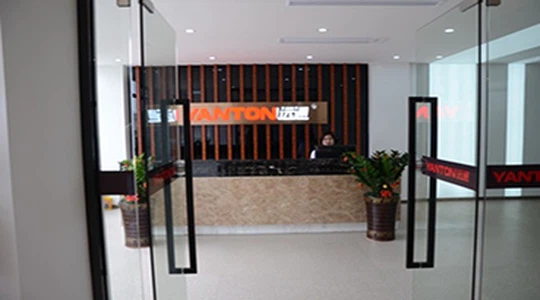
Quanzhou YANTON Electronics Co., Ltd. is founded in the year of 2009, which is a professional wireless communication equipment manufacturer integrates with R&D, production, sales, service and technological innovation strength. Our products cover POC radio, DMR radio, analog radio and so on.
With more than 7,000 square meters, YANTON has brought in advanced production equipment, testing instruments, standardized production workshops, well-equipped product laboratories and R&D offices. Our company has introduced the ERP management system and passed the ISO9001:2015 Quality Management System Certification. Also we use the components from TOSHIBA, ST, NEC etc. to guarantee the quality of the products. Our products have been passed the model approval by Ministry of Information Industry,also European CE RoHS and USA FCC. At present, our products have been sold to more than 58 countries such as Europe, the United States, Canada, Russia etc., and appraised highly by the customers.


FAQ
Q: Are 2 way radios still used?
Q: Is a two-way radio wired or wireless?
Q: Can other people hear you on a two-way radio?
Q: How far can two-way radios transmit?
Q: Why is it called a two-way radio?
Q: Do 2 way radios use cell towers?
Q: Why would I need a two-way radio?
Q: Is a two-way radio wired or wireless?
Q: Are two-way radios analog or digital?
Q: Why is it called a two-way radio?
Q: Can analog radios talk to digital radios?
Q: What are the benefits of an analog radio?
Q: Is analog safer than digital?
Q: What is an example of a two-way radio?
Q: Can two-way radios be tracked?
Q: Why would I need a two-way radio?
Q: What is the purpose of DMR radio?
Q: What can I do with a DMR radio?
Q: Do DMR radios work without internet?
Q: Can DMR radios talk to analog?
We're professional speaker manufacturers and suppliers in China, specialized in providing high quality customized products. We warmly welcome you to buy or wholesale high-grade speaker for sale here from our factory.
Listen Only Earphone, Walkie Talkie Remote Speaker Microphone