

Analog Portable Two Way Radio
Analog portable two way radios are communication devices that use analog signals to transmit and receive voice and other kinds of messages. These radios are designed to be portable, lightweight, and durable, and are used in a variety of settings such as construction sites, security agencies, event management, and emergency services. They can transmit messages over short or long distances, depending on the power output of the radio and the terrain. Analog portable two way radios are commonly used in situations where reliable and immediate communication is essential.
1. Professional team: We have a professional team that designs and develops wireless communication technology, with a deep understanding of wireless communication networks, protocols, and related technologies.
2. High quality
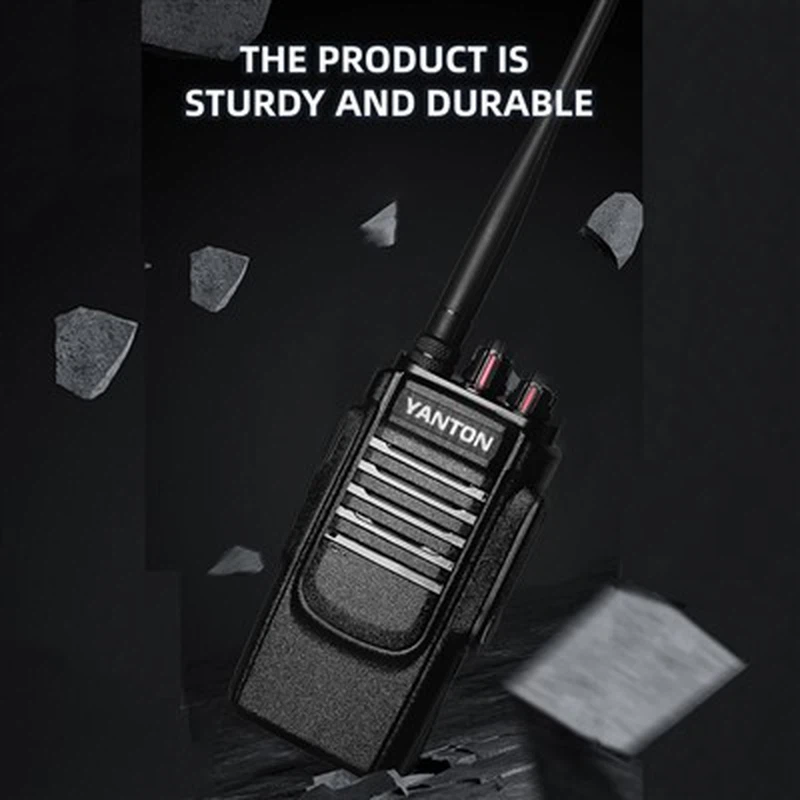
Our products are durable and can withstand harsh environments. We use the latest manufacturing technologies and processes to manufacture products that meet or exceed industry standards.
3. Innovation
We have invested heavily in research and development, which has enabled us to stay at the forefront of emerging technologies and trends. This means we can provide innovative products to meet the constantly changing needs of our customers.
4. Reliable service
Our team is committed to providing reliable and consistent service, ensuring that you receive high-quality products and customer support from us every time.


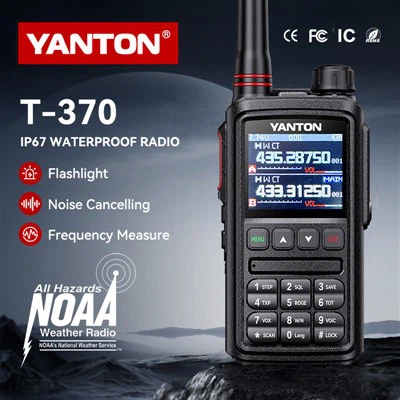
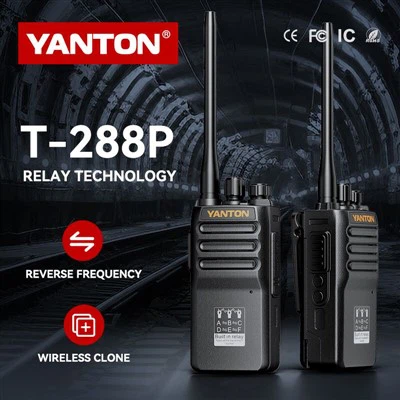


Advantages of Analog Portable Two Way Radio
Reliable communication: Analog two-way radios have been around for decades and have proven to be extremely reliable. They provide clear and consistent communication even in areas with weak cellular coverage.
Simple to use: Analog radios are easy to use and require minimal training. Their simple interface and intuitive controls make them an ideal choice for emergency responders, security personnel, and other professionals who need reliable communication.
Long battery life: Analog radios have a longer battery life than their digital counterparts. With a single charge, they can last up to 12 hours or more depending on usage.
Cost-effective: Analog radios are generally less expensive than digital radios. They require fewer components, making them a budget-friendly option for small businesses and organizations.
Compatible with older equipment: Analog radios can communicate with older analog equipment, making them a good choice for businesses that still have legacy equipment.
No latency: Analog radios operate in real-time, with no delay or latency. This makes them ideal for situations where speed and accuracy are critical, such as emergency response.
Robust: Analog radios are resilient and can handle harsh environmental conditions, making them an excellent choice for outdoor activities such as camping, hiking, and construction projects.
How Many Analog Portable Two Way Radio Channels Do I Need?
The simple answer is that you should have enough channels to cover your staff using two-way radios in your business or organisation. It would be best if you also left enough channels for any possible future expansion of your radio system and any contingencies. In most cases, modern two way radio devices will have more than enough channels for your business/organisation's communication needs, so this should not be an issue.
Careful organisation in the planning stage of your radio system should allocate channels to relevant individuals (individual calls), group (group calls) and channels which everyone can use (all calls). This way, every department and every individual member can communicate with whomever they need.
Using channels allows you to allocate departments/teams without your radio being clogged up by everyone chatting on the same channel and is a better way to operate your radio system. Multiple radio channels can be beneficial, so you can switch to another channel if you suffer interference.
When deciding which radio devices to order for your business, you should consider the possible future needs and consider it a long-term investment, so you don't have to spend further budget on new devices.
Another thing to consider is that the availability of radio spectrum licenses will dictate the number of radio channels available.

Analog Portable Two Way Radio is a safety feature that automatically alerts supervisors or colleagues when a lone worker has suddenly fallen. So they can respond quickly to assess the situation and provide assistance.
The working principle of is simple to explain. The radio triggers an emergency alarm when tilted beyond some critical angle for longer than a preset time. If the radio is placed back in the vertical position within the preset time of the alarm being triggered, like ten seconds, the alarm stops. If it exceeds the preset time, the radio automatically sends SOS to dispatcher and other radio users.
The feature can be customized for different working environments. You can also adjust the other settings through the programming software, like the activation angle for alarm and auto open the microphone during the alarm.
Ensuring the safety of workers is vital. The feature helps to identify and mitigate the risks to lone workers in emergency situations. And you will often find this feature used in hazardous work environments where the risk of injury or accident is high, such as fields, mines, industrial plants, construction sites, and so on.
If your employees work alone, remotely, or in potentially hazardous environments, then you need to choose a two-way radio with man down feature for them. Remember, safety always comes first!
How Analog Portable Two Way Radio Work?
Analog portable two way radio works by converting audio to radio waves that are then transmitted through the air. These radio waves are received by other radios which convert the radio waves back to audio.
The conversion to radio waves can be sent as an analogue signal or a digital signal, with digital transmission being the more modern technology. With digital radio, it is possible to send other types of data over the radio waves such as text messages and status updates. It is even possible to encrypt data when using digital radio to stop people using your network without your permission.
What Frequencies Do Analog Portable Two Way Radio Use?
Analog portable two way radio works between the frequencies of 30 MHz (Megahertz) and 1000 MHz, also known as 1 GHz (Gigahertz). This range of two-way frequencies is divided into two categories:
● Very High Frequency (VHF) - Range between 30 MHz and 300 MHz
● Ultra-High Frequency (UHF) - Range between 300 MHz and 1 GHz.
From these ranges, most two-way radio equipment falls into the 136 - 174 MHz and 403 - 527 MHz parts of the spectrum and must be licenced. Each country has its own organisation tasked with allocating licences, but some two-way radio frequencies are allocated as licence-free (for instance, PMR446 at 446MHz).
It depends on what type of system you require. If you only need a small number of radios in a remote location over a small area then you might be able to use unlicensed radios. If you require a larger area of coverage, require secure communications, have multiple teams who need to communicate separately, or are operating in a built-up area such as a town centre then you will need to buy licensed equipment.
Radio licencing is a complex topic, but through extensive partner network, we can pair you with a local expert to help you find the solution that is right for you while aiding you through the licensing process for your region.

How to Use a Analog Portable Two Way Radio?
Analog portable two way radio communication systems provide a reliable framework for business and organisations to stay in touch. Two way radio offers a vast range of benefits above and beyond the essential communication that they offer including improving decision making, teamwork and providing essential health and safety. Sometimes even the most effective radio system can be let down if the right procedures and training aren't in place and the user is not able to handle a radio confidently.
Make sure that your battery is charged. You won't get very far if this does not happen. Then switch on the radio this is often done with the volume control. Check to see that the radio is on the correct channel otherwise no one will hear you and vice versa. Then listen for transmission and adjust the volume to a comfortable audible level.
If you want to make a call, wait for the channel to become clear to avoid interference. Push and hold the PTT button. Speak into the microphone (10 to 15 centimetres from your mouth) clearly and at a normal voice level. Then release the PTT to return to receive.
As two-way radios only allow one person to speak at a time, it's best to keep your transmissions short and to the point. This enables other users to have the opportunity to acknowledge your message or request further clarification before you carry on to your next point. Be patient and give the other person some time to think before they reply.
When you first press the push to talk (PTT) button there can be a short delay before your radio transmits. This could result in the start of your sentence being cut off so wait for a second or two before speaking to be sure your listeners receive your whole message.
It helps two-way radio communications when everyone understands and uses similar language and etiquette especially when there are more than two people using the channel. You will notice that some of your colleagues may say 'over' when they have finished speaking or 'out' when the conversation is finished and the channel is clear for other users. It is useful to pick up on these phrases as they will improve not only your confidence but the efficiency of the radio scheme.
What Distance Do Analog Portable Two Way Radio Work Over?

The answer to this question depends on the equipment you are using and the infrastructure you have installed around it. As an example, the international space station, orbiting at an altitude of 408 KM uses two-way radio to communicate with the earth, but there are very few obstructions between the station and the antennas so the signal is easily received. In comparison, an unlicensed radio operating inside a building may only work for around 100 metres.
Analog portable two way radio can have infrastructure installed around the area of coverage which makes the range of the system only limited by the amount of equipment you can afford to install. Two-way radio repeaters can extend signals over a large area and can be joined together through other means such as the internet to create connected pockets of coverage (such as a multi-site university campus).
Scrambling Methods in Analog Portable Two Way Radio
Analog portable two way radio use scrambling techniques to obscure the content of a voice message. These scrambling methods make it more difficult for unauthorized listeners to understand your conversation. Some common scrambling techniques are:
Voice inversion
Voice inversion is an elemental scrambling method. It inverts the frequencies of voice signals, making them difficult to understand. Only walkie-talkies with the voice inversion scrambler can decipher the message.
The voice inversion method only offers basic privacy levels. With specialized hardware and software, a professional eavesdropper can still listen in on your conversation.
Split-band inversion
Split-band inversion is a more advanced inversion method. It splits the voice frequency into two bands and then inverts them separately. This method provides slightly better information protection. But eavesdroppers can still decode your message using the right equipment.
Rolling code inversion
In rolling code inversion, the parameters change at regular intervals. It uses a random code to choose the carrier frequency and change it at various speeds. Thus, it becomes more challenging to decipher the message. Rolling code inversion provides the highest level of analog security. But your conversation may still be decrypted by sophisticated eavesdroppers.
Our Factory
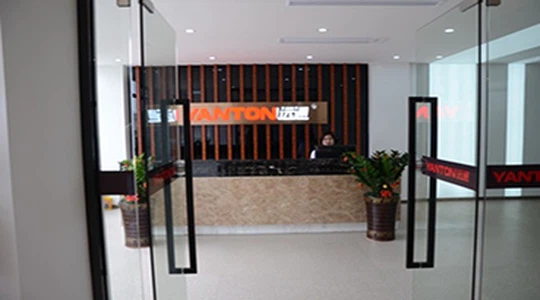
Quanzhou YANTON Electronics Co., Ltd. is founded in the year of 2009, which is a professional wireless communication equipment manufacturer integrates with R&D, production, sales, service and technological innovation strength. Our products cover POC radio, DMR radio, analog radio and so on.
With more than 7,000 square meters, YANTON has brought in advanced production equipment, testing instruments, standardized production workshops, well-equipped product laboratories and R&D offices. Our company has introduced the ERP management system and passed the ISO9001:2015 Quality Management System Certification. Also we use the components from TOSHIBA, ST, NEC etc. to guarantee the quality of the products. Our products have been passed the model approval by Ministry of Information Industry,also European CE RoHS and USA FCC. At present, our products have been sold to more than 58 countries such as Europe, the United States, Canada, Russia etc., and appraised highly by the customers.


FAQ
Q: What is the difference between a walkie talkie and a 2 way radio?
Q: What is a two way radio used for?
Q: How far can two way radios transmit?
Q: Do two way radios work anywhere?
Q: Can a two-way radio be traced?
What type of radio do police use?
Police radio systems almost always use two-way radio systems to allow for communications between police officers and dispatchers. Most modern police radio systems are encrypted, and many jurisdictions have made listening to police radio frequencies as a private citizen illegal.
Q: How analog portable two way radio work?
The conversion to radio waves can be sent as an analogue signal or a digital signal, with digital transmission being the more modern technology. With digital radio, it is possible to send other types of data over the radio waves such as text messages and status updates. It is even possible to encrypt data when using digital radio to stop people using your network without your permission.
Q: What is the difference between analog and digital 2 way radios?
Q: Which radio is better digital or analog?
Q: What is an analog radio?
Q: Do analog radios still work?
Q: Can analog radios talk to digital radios?
Q: What are the benefits of an analog radio?
Q: Is analog safer than digital?
Q: What is an example of a two-way radio?
Q: Can two-way radios be tracked?
Q: How far can two-way radios transmit?
Q: Why is it called a two-way radio?
Q: Do 2 way radios use cell towers?
Q: Why would I need a two-way radio?
We're professional analog portable two way radio manufacturers and suppliers in China, specialized in providing high quality customized products. We warmly welcome you to buy or wholesale high-grade analog portable two way radio for sale here from our factory.
5w Uhf Vhf Two Way Radio, Uhf Vhf Dual Band Handheld Ham Radio, Hidden Display Portable Radio Walkie Talkie