

Analog Two Way Radio
An Analog Two Way Radio is a communication device that uses analog signals to transmit and receive voice communication. It allows users to communicate with each other within a specified range by transmitting and receiving signals on a specific frequency or channel. Analog radios are commonly used in various industries such as public safety, transportation, hospitality, and construction. However, their popularity has declined with the advent of digital two-way radios, which offer improved sound quality, better privacy, and enhanced features.
1. Professional team: We have a professional team that designs and develops wireless communication technology, with a deep understanding of wireless communication networks, protocols, and related technologies.
2. High quality
Our products are durable and can withstand harsh environments. We use the latest manufacturing technologies and processes to manufacture products that meet or exceed industry standards.
3. Innovation
We have invested heavily in research and development, which has enabled us to stay at the forefront of emerging technologies and trends. This means we can provide innovative products to meet the constantly changing needs of our customers.
4. Reliable service
Our team is committed to providing reliable and consistent service, ensuring that you receive high-quality products and customer support from us every time.


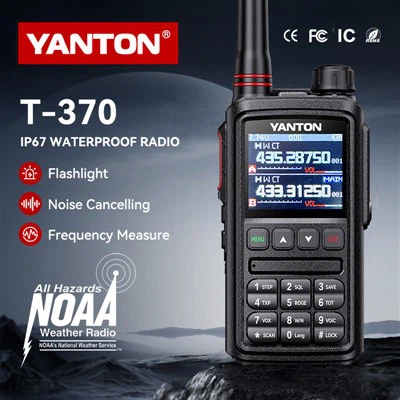
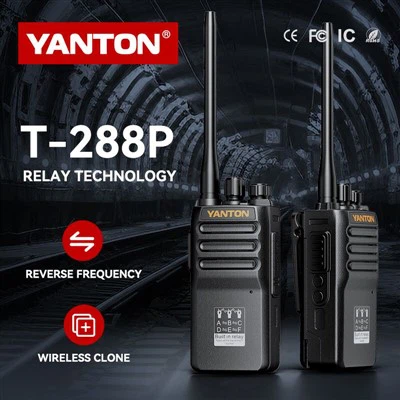


Advantages of Analog Two Way Radio
No need for network infrastructure: Analog two way radios work independently of any network infrastructure. This makes them ideal for areas with poor cell network coverage or where there is no network infrastructure available.
Reliable communication: Analog radios are designed to offer reliable communication even in harsh environments where other forms of communication might fail. They are also less susceptible to interference from other signals or electronic devices.
Simple to use: Analog two way radios are easy to operate without the need for complicated programming or setup procedures. They are ideal for users who are not tech-savvy or are in situations where time is of the essence.
No recurring cost: Unlike other forms of communication such as mobile phones, analog two way radios have no recurring costs. Once you purchase the device, you can use it as long as it remains functional.
Long battery life: Analog radios use lower frequencies, which helps to preserve battery life. This means that you can use the device for long periods without the need for recharging or replacement of batteries.
Compatibility with older systems: Analog radios are compatible with older radio systems, which makes them suitable for organizations that have existing analog systems in place.
Cost-effective: Analog two way radios are generally cheaper than digital two way radios. This makes them ideal for organizations that are working on a budget or those that require communication devices in large numbers.
How the Feature on the Analog Two Way Radio Improves Worker Safety?
Analog two way radio is a safety feature that automatically alerts supervisors or colleagues when a lone worker has suddenly fallen. So they can respond quickly to assess the situation and provide assistance.
The working principle of is simple to explain. The radio triggers an emergency alarm when tilted beyond some critical angle for longer than a preset time. If the radio is placed back in the vertical position within the preset time of the alarm being triggered, like ten seconds, the alarm stops. If it exceeds the preset time, the radio automatically sends SOS to dispatcher and other radio users.
The feature can be customized for different working environments. You can also adjust the other settings through the programming software, like the activation angle for alarm and auto open the microphone during the alarm.
Ensuring the safety of workers is vital. The feature helps to identify and mitigate the risks to lone workers in emergency situations. And you will often find this feature used in hazardous work environments where the risk of injury or accident is high, such as fields, mines, industrial plants, construction sites, and so on.
If your employees work alone, remotely, or in potentially hazardous environments, then you need to choose a two-way radio with man down feature for them. Remember, safety always comes first!

How to Use a Analog Two Way Radio?
Analog two way Radio communication systems provide a reliable framework for business and organisations to stay in touch. Two way radio offers a vast range of benefits above and beyond the essential communication that they offer including improving decision making, teamwork and providing essential health and safety. Sometimes even the most effective radio system can be let down if the right procedures and training aren't in place and the user is not able to handle a radio confidently.
Getting started
Make sure that your battery is charged.You won't get very far if this does not happen. Then switch on the radio this is often done with the volume control. Check to see that the radio is on the correct channel otherwise no one will hear you and vice versa. Then listen for transmission and adjust the volume to a comfortable audible level.
01
Being heard
If you want to make a call, wait for the channel to become clear to avoid interference. Push and hold the PTT button. Speak into the microphone (10 to 15 centimetres from your mouth) clearly and at a normal voice level. Then release the PTT to return to receive.
02
Be clear
As two-way radios only allow one person to speak at a time, it's best to keep your transmissions short and to the point. This enables other users to have the opportunity to acknowledge your message or request further clarification before you carry on to your next point. Be patient and give the other person some time to think before they reply.
03
Pause before speaking
When you first press the push to talk (PTT) button there can be a short delay before your radio transmits. This could result in the start of your sentence being cut off so wait for a second or two before speaking to be sure your listeners receive your whole message.
04
Learn the lingo
It helps two-way radio communications when everyone understands and uses similar language and etiquette especially when there are more than two people using the channel. You will notice that some of your colleagues may say 'over' when they have finished speaking or 'out' when the conversation is finished and the channel is clear for other users. It is useful to pick up on these phrases as they will improve not only your confidence but the efficiency of the radio scheme.
05
Suggestions for Maintaining Analog Two Way Radio
So you have made a purchase of a fleet of two way radios and want to ensure that you and your team look after them. We have put together a list of simple things that you can do to take care of your important investment.
Advice for storing two way radios
Radios should be stored in a clean, dry, cool place with limited exposure to the weather elements. When you store your radio, you should remove the battery as most modern radios have a soft on/off switch which will continually drain the battery.
Advice for charging two way radios
For day to day battery charging, make sure all the battery contacts are clean, both on the charger and the rear terminals of the battery. If the contacts are dirty then the battery may not be detected by the radio charger and will not charge the battery correctly. Make sure that you charge your radio batteries in a compatible charger otherwise you could potentially damage your battery and radio.
Advice for day to day use
Advice for looking after your fleet of two-way radios
Our radios meet the highest standards of mil-spec, waterproofing and dust proofing. However radios can be damaged due to repetitive mistreatment such as being dropped, chewed aerials (yes this really does happen) and swinging the radio by the antenna etc. Protecting the exterior of your radio will help protect the components, minimizing repairs and cost of replacing the equipment.
Advice for cleaning two way radios
Although we have two way radios that are highly dust/waterproof, there may be a time when you need to clean them. Firstly ensure that the radios are turned off. Avoid any industrial cleaners that have not been approved to clean your radios as they could potentially damage them. Use a damp microfiber cloth to remove any excess dirt.
Scrambling Methods in Analog Two Way Radio
Analog two way radio use scrambling techniques to obscure the content of a voice message. These scrambling methods make it more difficult for unauthorized listeners to understand your conversation. Some common scrambling techniques are:
Voice inversion
Voice inversion is an elemental scrambling method. It inverts the frequencies of voice signals, making them difficult to understand. Only walkie-talkies with the voice inversion scrambler can decipher the message.
The voice inversion method only offers basic privacy levels. With specialized hardware and software, a professional eavesdropper can still listen in on your conversation.
Split-band inversion
Split-band inversion is a more advanced inversion method. It splits the voice frequency into two bands and then inverts them separately. This method provides slightly better information protection. But eavesdroppers can still decode your message using the right equipment.
Rolling code inversin
In rolling code inversion, the parameters change at regular intervals. It uses a random code to choose the carrier frequency and change it at various speeds. Thus, it becomes more challenging to decipher the message. Rolling code inversion provides the highest level of analog security. But your conversation may still be decrypted by sophisticated eavesdroppers.

It is true that in some cases people use mobile phones in place of two way radios. However, there are good reasons to use analog two way radio for your business:
● When you want to call someone on a mobile phone, at a minimum, you have to press a speed dial button and wait for a connection. Between the dialling and the time delay of the person on the other end answering, some time can go by (if they answer). With a two way radio you press a button and start talking. In an emergency, this speed could be critical.
● You can talk to multiple users at once.
● There is no monthly contract with two way radios. You never have to worry about exceeding your allotted time as you would do with a mobile phone.
● Radios are built to military specification, meaning they will work in wet environments or even after they are dropped on concrete. Most mobile phones are not built to this standard.
● Two way radios continue to work in natural disasters or major security incidents. Even if mobile phones work, the phone tower can get overloaded with everyone trying to make calls so your call may not go through.
● Two way radios stay on-site at the end of the day so they can be used by shift or night workers.
● There may be places in your business where mobile phones don't work. Two way radios can reach all areas of your business, when repeaters are installed.
Our Factory
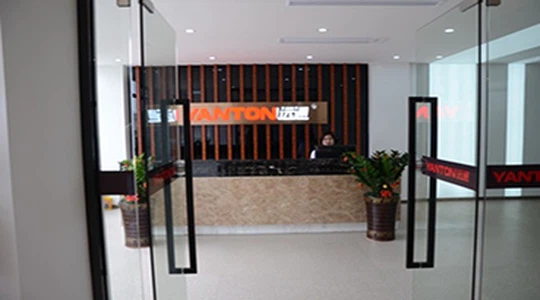
Quanzhou YANTON Electronics Co., Ltd. is founded in the year of 2009, which is a professional wireless communication equipment manufacturer integrates with R&D, production, sales, service and technological innovation strength. Our products cover POC radio, DMR radio, analog radio and so on.
With more than 7,000 square meters, YANTON has brought in advanced production equipment, testing instruments, standardized production workshops, well-equipped product laboratories and R&D offices. Our company has introduced the ERP management system and passed the ISO9001:2015 Quality Management System Certification. Also we use the components from TOSHIBA, ST, NEC etc. to guarantee the quality of the products. Our products have been passed the model approval by Ministry of Information Industry,also European CE RoHS and USA FCC. At present, our products have been sold to more than 58 countries such as Europe, the United States, Canada, Russia etc., and appraised highly by the customers.


FAQ
Q: What is the difference between analog and digital 2 way radios?
Q: Which radio is better digital or analog?
Q: What is an analog radio?
Q: Do analog radios still work?
Q: Can analog radios talk to digital radios?
Q: What are the benefits of an analog radio?
Q: Is analog safer than digital?
Q: What is an example of a two-way radio?
Q: Can two-way radios be tracked?
Q: Why would I need a two-way radio?
Q: Are 2 way radios still used?
Q: Is a two-way radio wired or wireless?
Q: Can other people hear you on a two-way radio?
Q: How far can two-way radios transmit?
Q: Why is it called a two-way radio?
Q: Do 2 way radios use cell towers?
Q: Why would I need a two-way radio?
Q: Is a two-way radio wired or wireless?
Q: Are two-way radios analog or digital?
Q: Why is it called a two-way radio?
We're professional walkie talkie earphone manufacturers and suppliers in China, specialized in providing high quality customized products. We warmly welcome you to buy or wholesale high-grade walkie talkie earphone for sale here from our factory.
Acoustic Clear Air Tube 3.5mm Jack Listen Only Earpiece Receive, Earhook Walkie Talkie